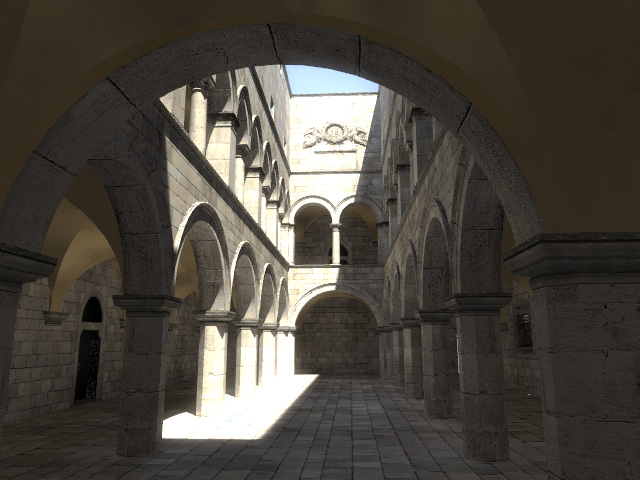
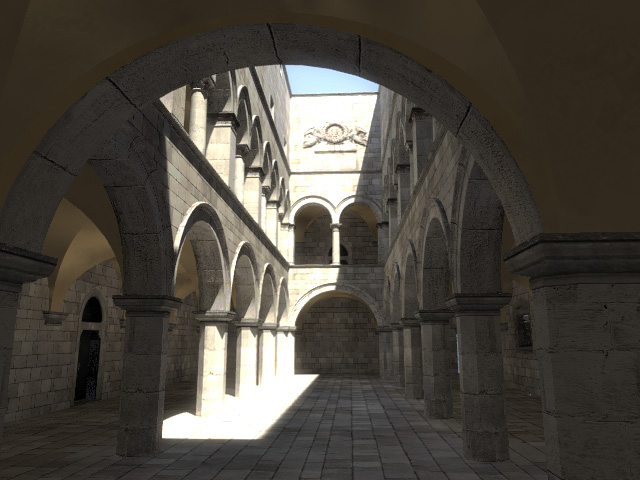
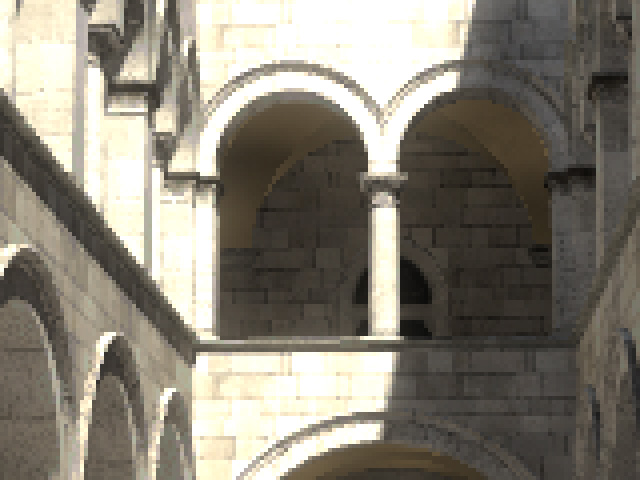
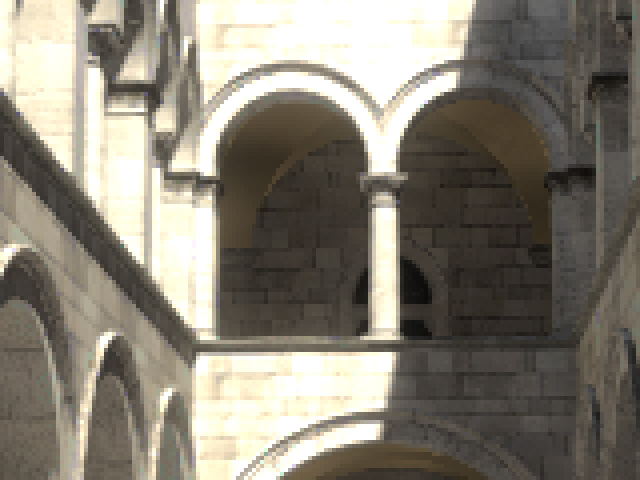
Figure 4 - The warped,
registered HDR image (right column) achieves an accurate match of the
perfectly produced synthetic HDR (left column) with loss of detail only
on the order of single-pixel data. All of the loss of fine detail in brightly
lit areas appears due to interpolation during the warp of the various
images in the sequential multi-exposure from which the HDR is created.
These images captured from a simulated 120 hz reasonably moving camera,
allowing 4 exposures per output frame at 30 hz. The OFE and subsequent
warp are able to register the images very effectively and with high accuracy,
as hoped, thanks to the increased on-chip temporal sampling density of
120 hz.
The HDR images from which these exposures were re-extracted can be downloaded directy: perfect, registered.
The HDR images from which these exposures were re-extracted can be downloaded directy: perfect, registered.