In our experiments of
exploring n-D Data Sets we can observe that real world data sets often
don't have excellent (=consistent) views to clusters.
The confusion introduced in axis-parallel projections are caused
by the projection itself and the complex arrangement of classes in n-D.
The research question then is to think about strategies which
allows an analyst to escape that situation. In our system we follow the
best
practise in data visualization and design to develop novel interactive analysis techniques.
Our idea of view collection
is based on small multiples. The idea of small multiples is to set a
particular design constant which allows an analyst
to focus on changes in the information. In our view collections we
first classify classes into two partitions: non-confusion and confusion.
Non-confusion classes don't increase the overall consistency if we remove that class from a view (=introduces small amount of
confusion).
In contrast to non-confusing classes, the removal of a confusing class
skyrockes the overall consistency of the view (=introduces large amount
of confusion into the view).
The idea of our view collection is to set non-confusing classes as a
constant design principle in all views, and compute for each single confusing
class a
individual view (together with the non-confusing classes). More precisely, the
number of views in our collection is equal to the number of confusing
classes.
Examples
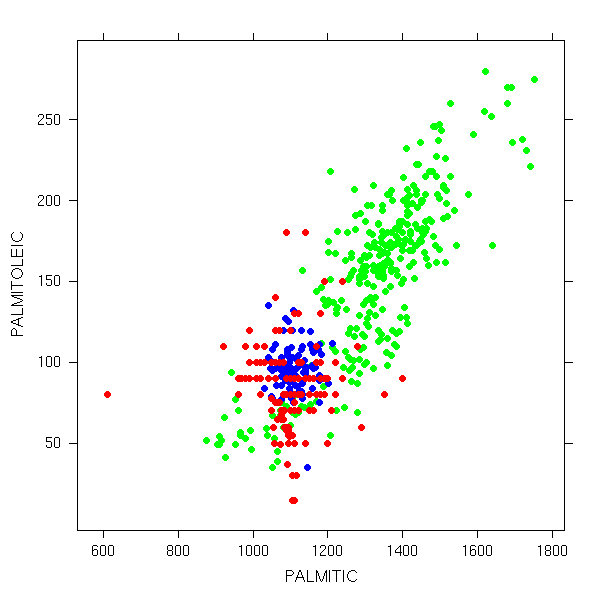
Original Confusing View with 2 overlapping classes (red and blue)
Consistency=50
We automatically substitute the confusing view with a consistent view collection
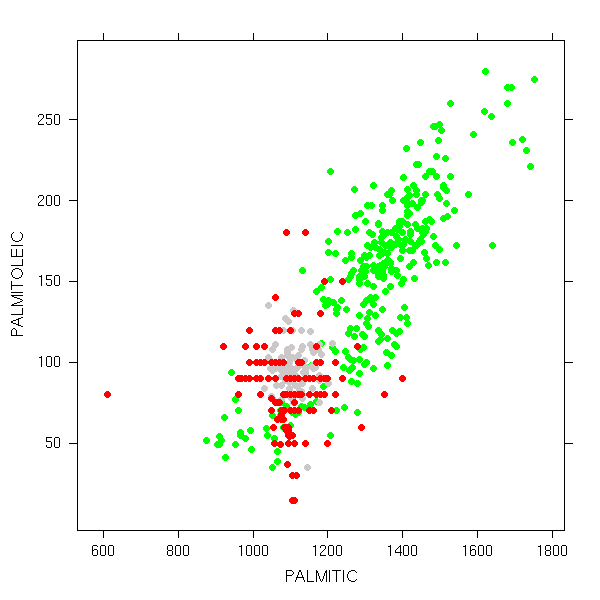
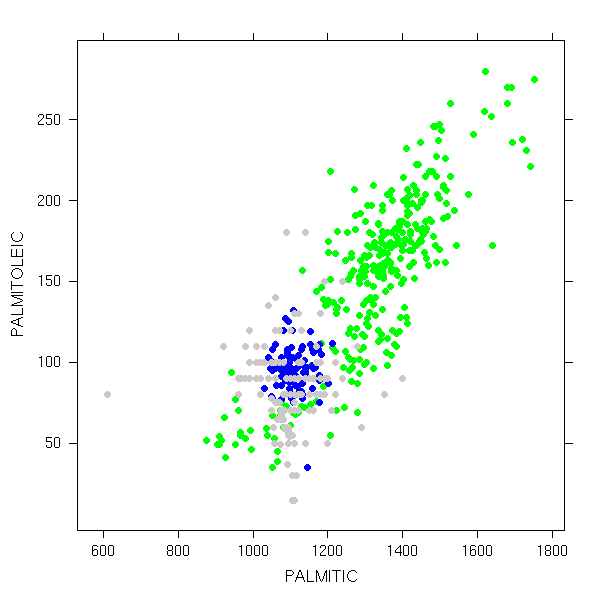
The view should be in a separate panel to allow the viewer to understand the complex arrangement of the classes.
Original Confusing View with 2 overlapping classes (green and red)
Consistency=66
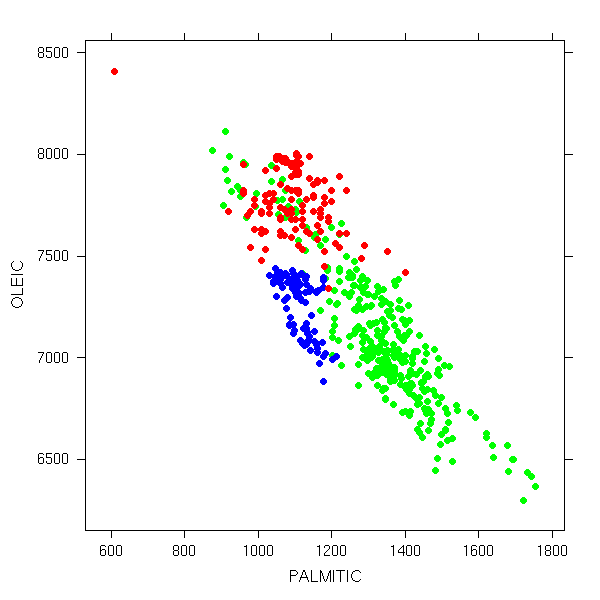
We automatically substitute the confusing view with a consistent view collection
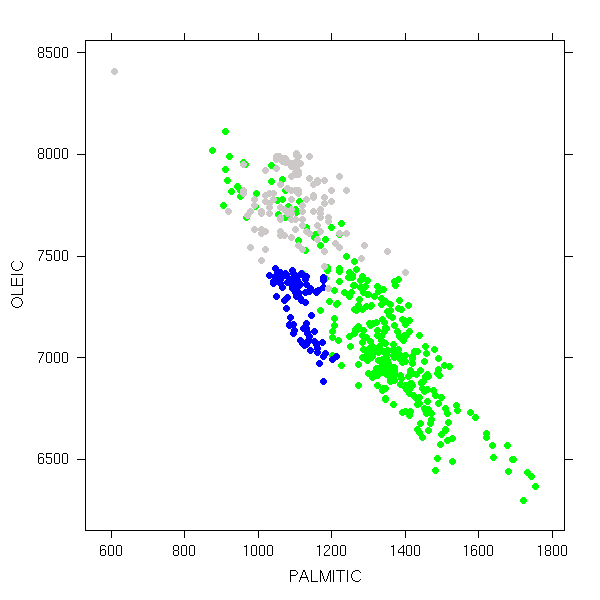
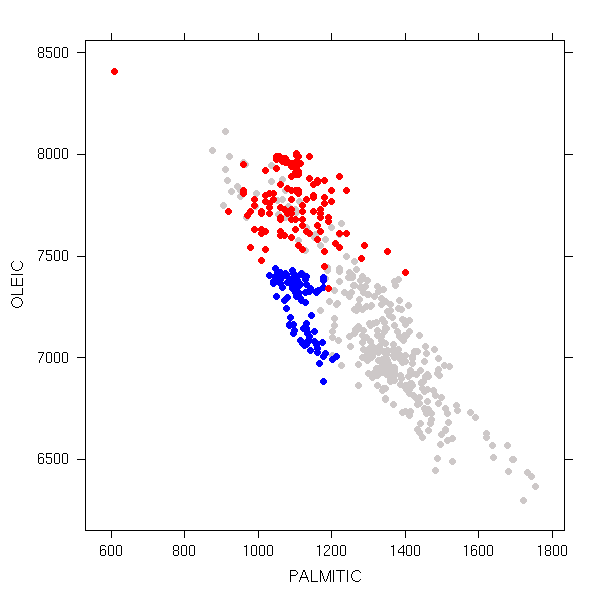
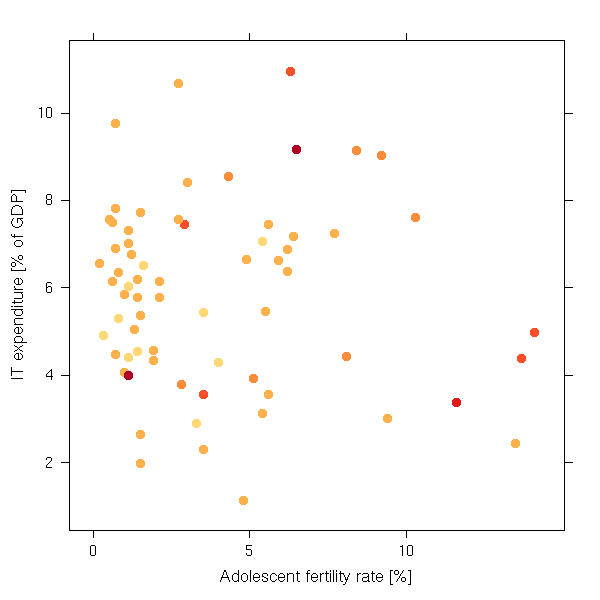
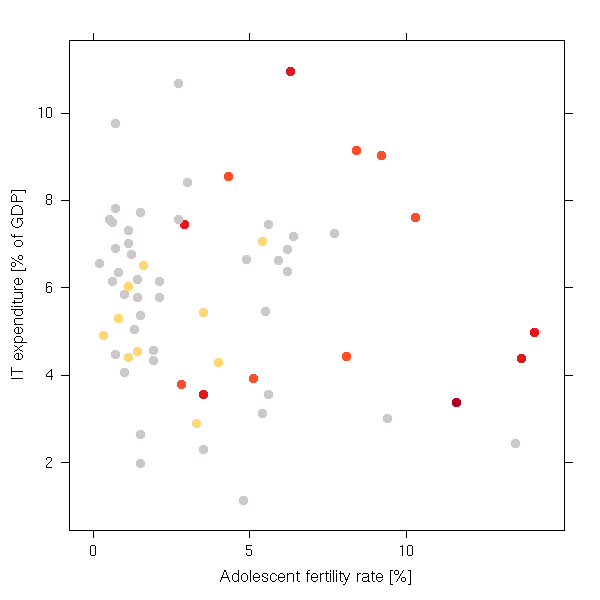
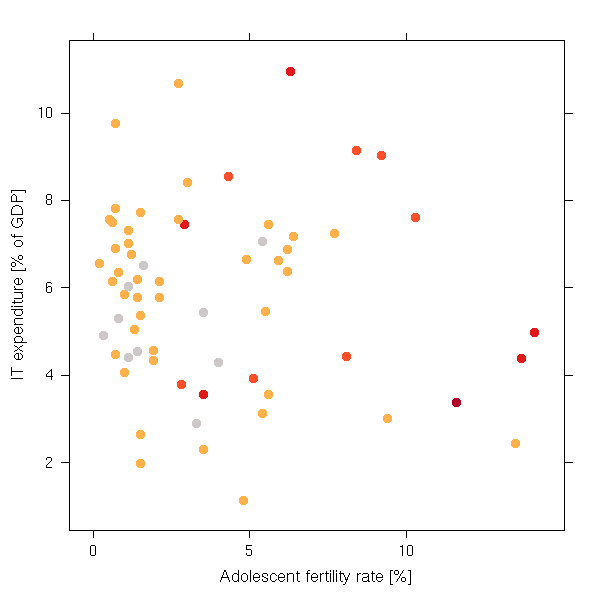
Please note, a computation of our view collection is not always appropriate. The following shows such an example from WHO Data.
Original View
Our view collection shows
The idea of our permutable class
views is based on Bertin's permutable matrix. In every view we choose
one class as to be constant, and then compute the view
which consistency value hits a user given threshold. The number of view
is therefore equal to the number of classes. Permutable Class Views
support the understanding
of local class arrangements, and at the same time, the global class
arrangements. Please note, we fade-out classes with large confusion
contributions in each view.
Need to compute an example
The views should be displayed in a stack-like fashion to allow the viewer to browse through different arrangements.