Local illumination III: texture mapping
CS 248 - Introduction to Computer Graphics
Spring Quarter, 1995
Marc Levoy
Lecture notes for Tuesday, June 6
Table of contents:
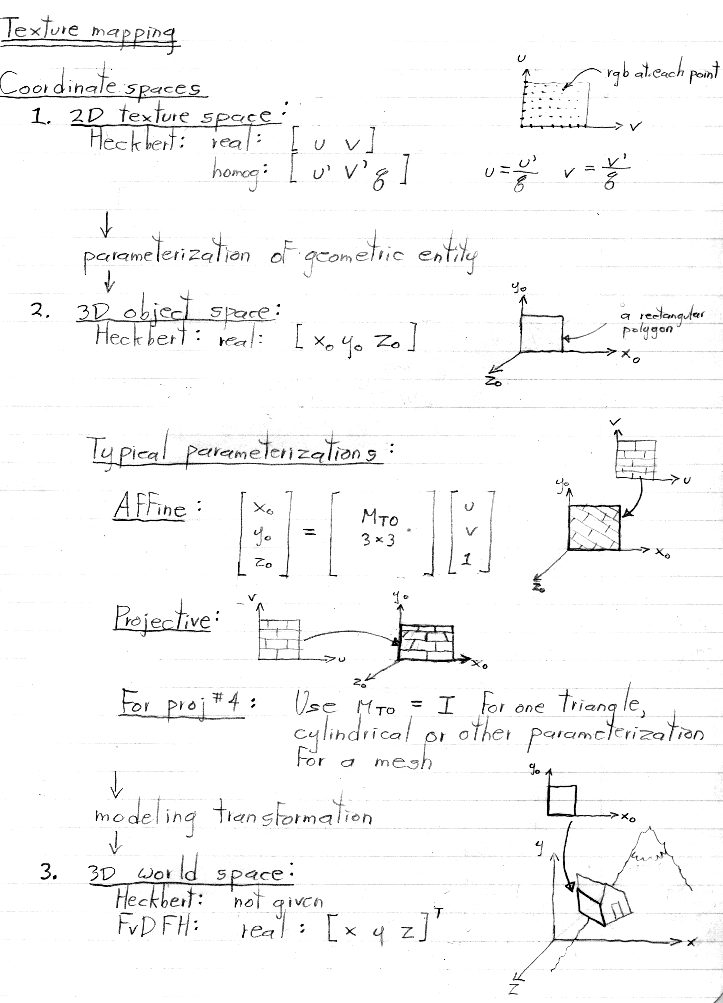
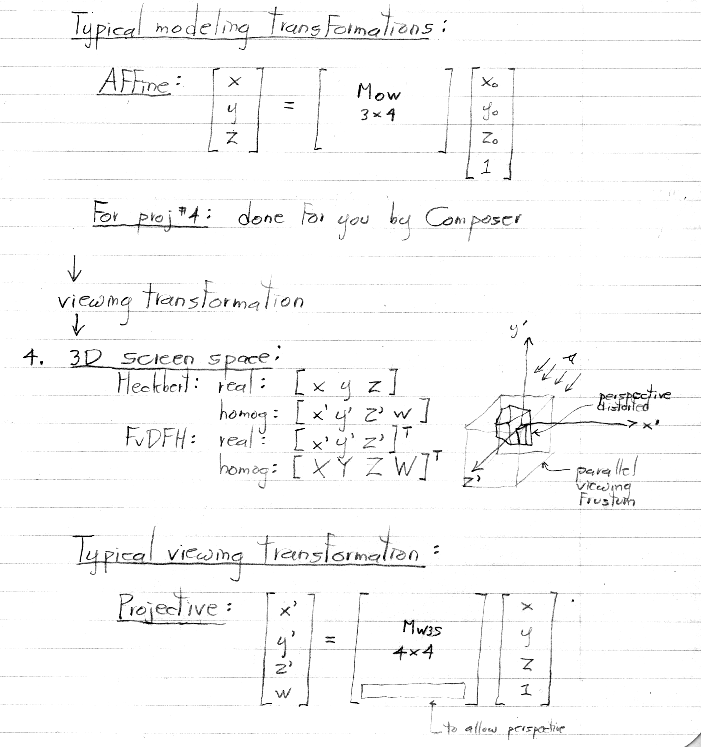
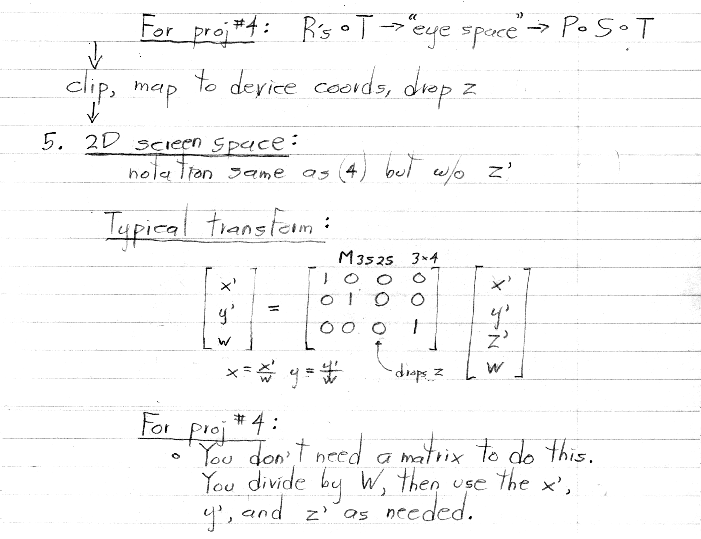
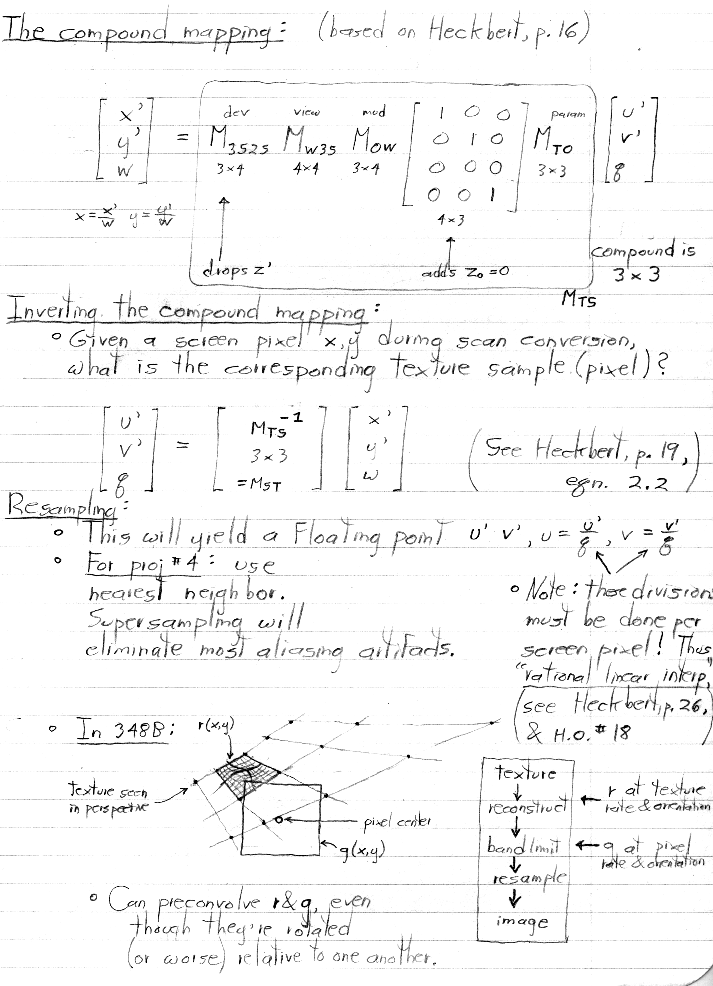
- Texture mapping
- What are textures good for? (slide show!)
- color - e.g. the kd in a Phong model
- opacity - can be used for surprising 3D effects
(Gardner's ellipsoidal clouds)
- mixing - a selector between two other textures
or two shading models (Cook's shade trees)
- bump mapping - the texture perturbs the surface normals
- displacement mapping - the texture perturbs the
surface geometry (also in Cook's shade trees)
Requires shading before visibility
- generative modeling - the texture decides where primitives
are placed (Reeves's trees)
May be non-invertible, so ray tracing becomes hard
- solid texturing - consistent texture across
the surface of a solid (Perlin's marble vase)
- volume rendering - color and opacity throughout a volume
(Kajiya's teddy bear)
Press here for part I of this lecture.
Press here for part II of this lecture.
levoy@cs.stanford.edu
Friday, 20-Feb-1998 13:46:39 PST