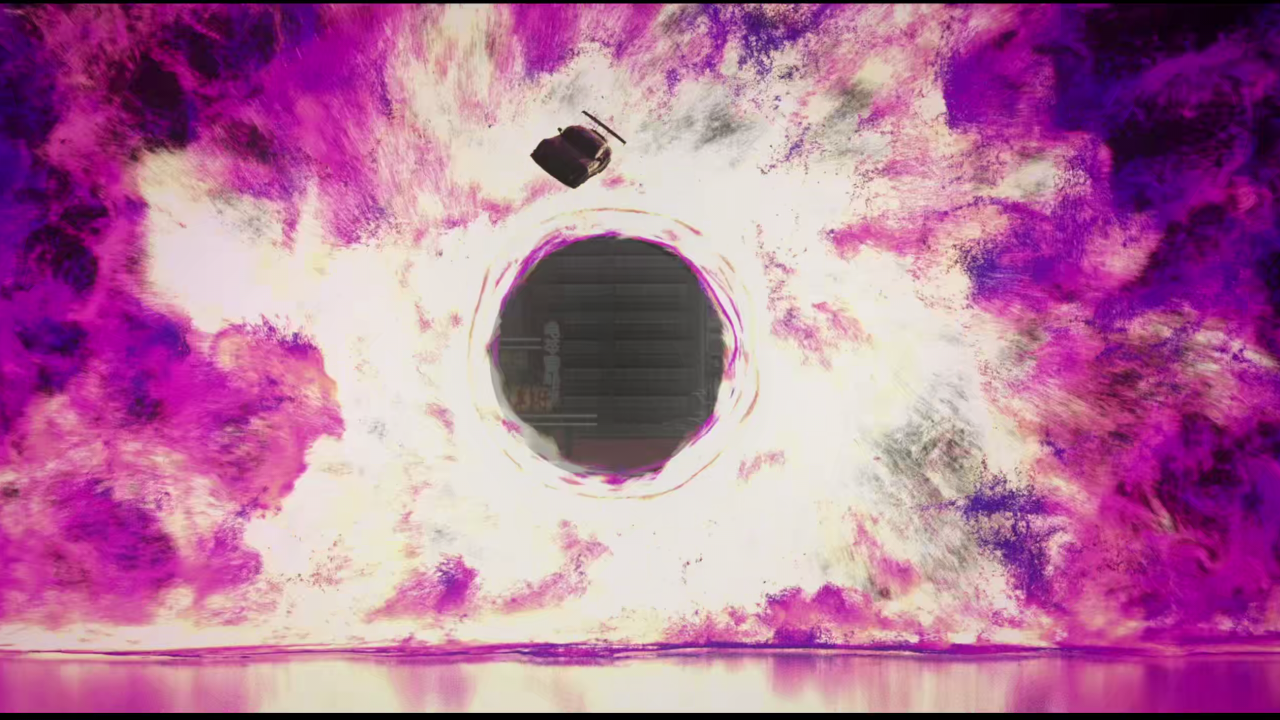
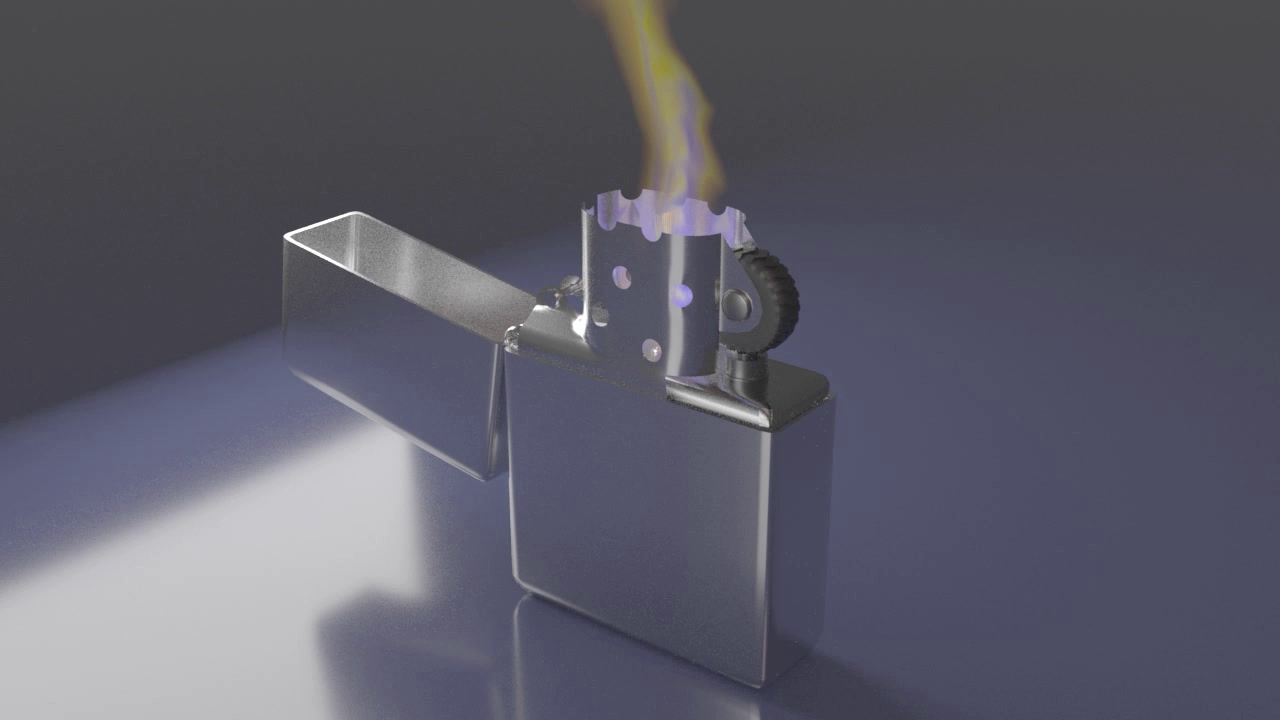
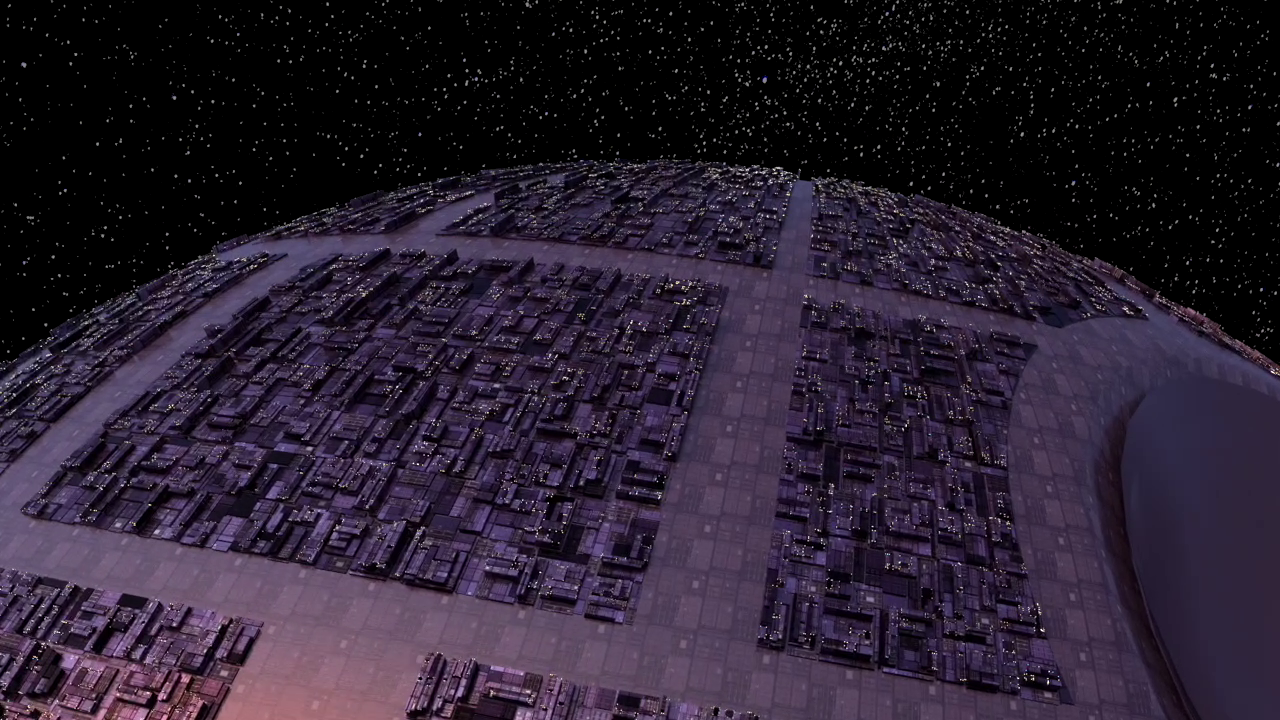
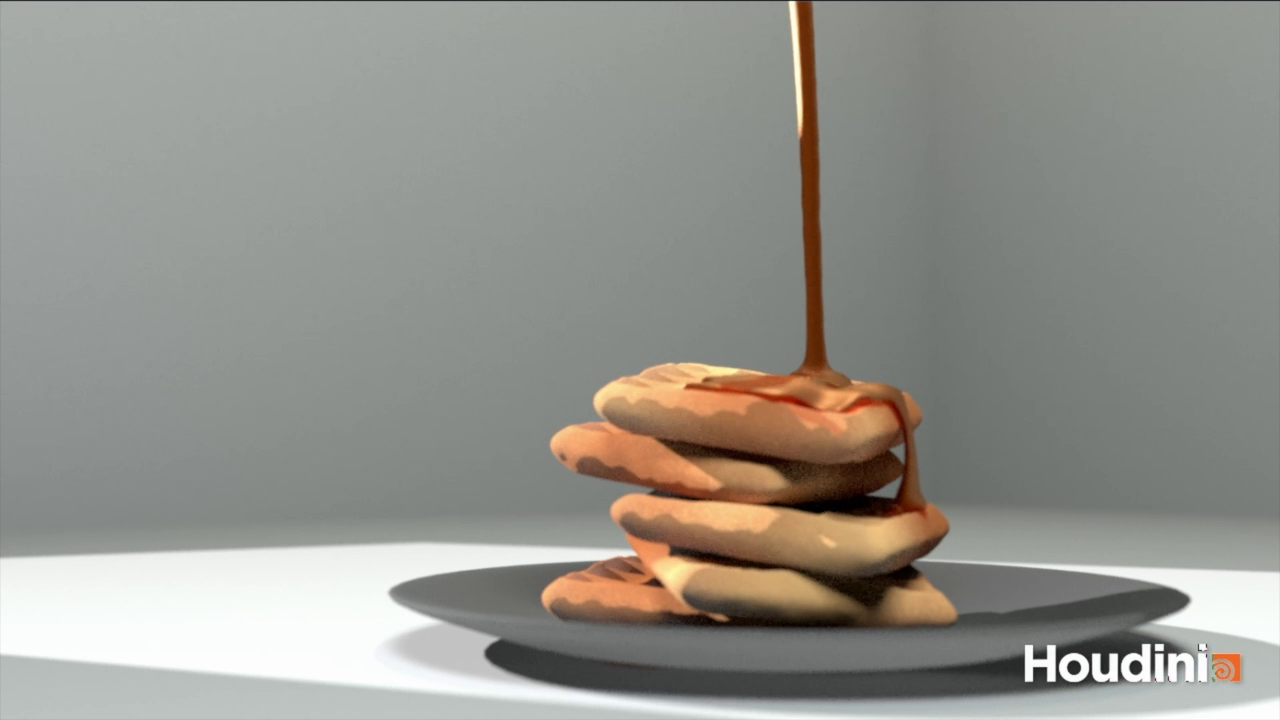
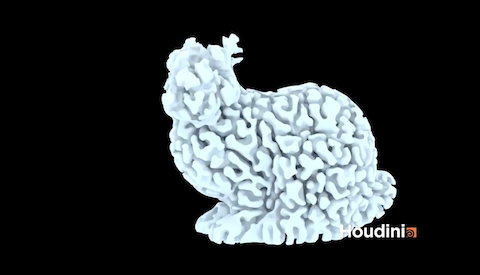
| TuJan06 |
Introduction
|
Slides:
Homework Activities:
- Download and install SideFX Houdini Apprentice (registration required)
- Start Houdini readings and tutorials in Homework #1
|
| Due WeJan14 |
Homework #1: Hello Houdini
|
Assignment Link
Goal: Install Houdini Apprentice, create something simple, and submit a video or still.
Submit by Wednesday, Jan 14.
Show & Tell on Thursday, Jan 15.
|
| ThJan08 |
Introduction to Houdini
|
Material:
- Slides (PDF)
- Houdini project file (hipnc)
- Houdini learning curve (now with server ;)
|
TuJan13
ThJan15
TuJan20
ThJan22 |
Procedural Modeling
|
Material:
- Slides (PDF)
- Houdini project file (hipnc)
|
| Due WeJan21 |
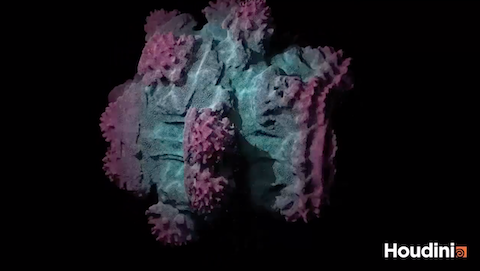
Homework #2: Procedural Modeling
|
Assignment Link
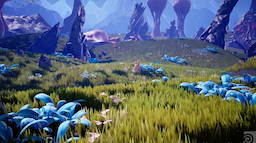
Image Credit: "Planet Alpha," Adrian Lazar
|
| TuJan27 |
Particle Systems
|
Material:
- Slides (PDF)
- Particle system dynamics (read Witkin course notes, slides)
- Numerical integration
- Particle collisions
- Energy-based modeling of forces
- Houdini example: particles.hipnc
- Particles bouncing on a plane
- Particles inside a convex domain
- Particles inside an SDF domain
- Particles attached to an SDF surface using damped springs <oh, my>
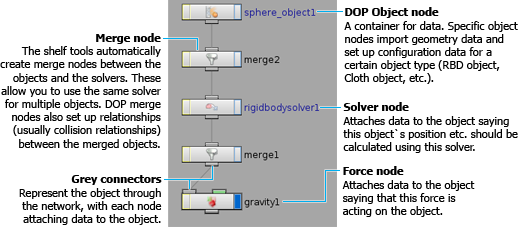
- Custom Solvers, POP Networks, etc.
References:
- David Baraff and Andrew Witkin, Physically Based Modeling, Online SIGGRAPH 2001 Course Notes, 2001.
- Differential Equation Basics
- Particle System Dynamics (slides)
- Cloth and Fur Energy Functions (preview of energy function usage)
- Videos:
|
| Due WeFeb04 |
Homework #3: Dynamics
|
Assignment Link
Image Credit: [Baraff and Witkin 1998]
|
ThJan29
TuFeb03 |
Houdini Dynamics
|
Material:
- Slides (PDF)
- See video recording for live examples
|
TuFeb10
ThFeb12 |
Constrained Dynamics
|
Slides (PDF)
Material:
- Holonomic constraints, C(p)=0.
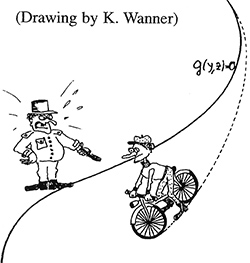
- Example: Bead on a wire
- Differentiating constraints w.r.t. time.
- Constraint Jacobian, J
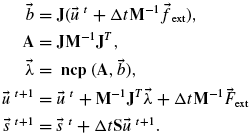
- Lagrange multipliers, lambda, and constraint forces, J^T lambda
- Solving for Lagrange multipliers
- (Implicit constraint (and half-explicit) DAE integration schemes)
- Post-step projection schemes
- Position- vs velocity-based corrections
- Applications: Mechanical linkages, inextensibility constraints, incompressible flow, contact constraints
- Houdini Example: Surface constraints
References:
- David Baraff and Andrew Witkin, Physically Based Modeling, Online SIGGRAPH 2001 Course Notes, 2001.
- Examples from Cloth Simulation:
- Rony Goldenthal, David Harmon, Raanan Fattal, Michel Bercovier, Eitan Grinspun, Efficient Simulation of Inextensible Cloth, ACM Transactions on Graphics, 26(3), July 2007, pp. 49:1-49:7. [ACM Digital Library link]
- Jonathan M. Kaldor, Doug L. James, Steve Marschner, Simulating Knitted Cloth at the Yarn Level, ACM Transactions on Graphics, 27(3), August 2008, pp. 65:1-65:9.
[Advanced] References for Differential-Algebraic Equations (DAEs):
|
|
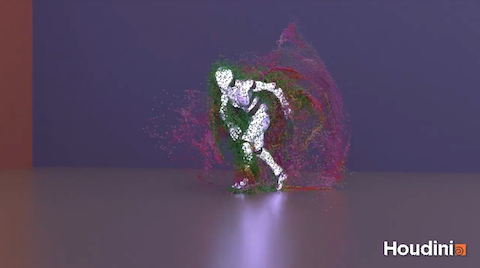
Homework #4: Character & Audio FX
|
Assignment Link
Submit your video artifact for weeklies
|
ThFeb12
|
Rigid-Body Motion
|
Slides/Notes (PDF)
References:
- David Baraff and Andrew Witkin, Physically Based Modeling, Online SIGGRAPH 2001 Course Notes, 2001.
- Rigid Body Simulation (notes, slides)
- Two-body impulse calculation: See Baraff course notes.
- Euler's equations for dynamics of a single rigid body in body coords (wiki)
- Houdini example of body-coordinate integration (eulerRBMotion.hipnc)
- Excellent recent review:
- Related topics:
|
| TuFeb17 |
|
Slides (PDF)
References:
- Jan. Bender, Matthias. Müller, Miles. Macklin, Position-Based Simulation Methods in Computer Graphics, EUROGRAPHICS Tutorial Notes, 2015, Zürich, May 4-8. (Course Notes) (Slides)
- M. Müller, B. Heidelberger, M. Hennix, J. Ratcliff, Position Based Dynamics, Proceedings of Virtual Reality Interactions and Physical Simulations (VRIPhys), pp 71-80, Madrid, November 6-7 2006, Best Paper Award, PDF, (video), (slides)
- Miles Macklin, Matthias Müller, Nuttapong Chentanez: XPBD: Position-Based Simulation of Compliant Constrained Dynamics in Proceedings of ACM Motion in Games, San Francisco, October 2016. [PDF] [Slides] [Video] [Youtube] (An improved PBD approach; related to Houdini's Vellum implementation)
Other Reading:
- Jos Stam, Nucleus: Towards a Unified Dynamics Solver for Computer Graphics, 2009 Conference Proceedings: IEEE International Conference on Computer-Aided Design and Computer Graphics, pp. 1-11, 2009. (related talk)
- T. Jakobsen, Advanced Character Physics, Game Developer Conference, 2001.
- Miles Macklin, Matthias Müller, Nuttapong Chentanez, and Tae-Yong Kim. 2014. Unified particle physics for real-time applications. ACM Trans. Graph. 33, 4, Article 153 (July 2014), 12 pages. [ACM link]
- Sofien Bouaziz, Sebastian Martin, Tiantian Liu, Ladislav Kavan, and Mark Pauly. 2014. Projective dynamics: fusing constraint projections for fast simulation. ACM Trans. Graph. 33, 4, Article 154 (July 2014), 11 pages. [ACM link]
- Rahul Narain, Matthew Overby, George E. Brown, ADMM ⊇ Projective Dynamics: Fast Simulation of General Constitutive Models, ACM SIGGRAPH / Eurographics Symposium on Computer Animation (SCA), 2016.
|
| TuFeb17 |
Shape Matching Methods
|
Discussed:
- General ideas:
- Projecting particle motion to be rigid motion
- Deformation gradient & Polar decomposition
- Rigid-body shape matching
- Fast Lattice Shape Matching (FastLSM)
- Other methods (adaptive FastLSM; Oriented particles)
Material:
- Matthias Müller, Bruno Heidelberger, Matthias Teschner, Markus Gross, Meshless deformations based on shape matching, ACM Transactions on Graphics, 24(3), August 2005, pp. 471-478. [ACM] [PDF] [AVI]
- Alec R. Rivers, Doug L. James, FastLSM: Fast Lattice Shape Matching for Robust Real-Time Deformation, ACM Transactions on Graphics, 26(3), July 2007, pp. 82:1-82:6. [ACM] [PDF]
- Denis Steinemann, Miguel A. Otaduy, Markus Gross, Fast Adaptive Shape Matching Deformations, ACM SIGGRAPH/Eurographics Symposium on Computer Animation, Dublin, July 7-9, 2008. [PDF] [AVI]
- Matthias Müller and Nuttapong Chentanez. Solid simulation with oriented particles. ACM Trans. Graph. 30, 4, Article 92 (July 2011), 10 pages, 2011. [ACM] [PDF] [MOVIE]
|
| ThFeb19 |
Show & Tell: HW4 Char/Motion FX
|
|
| ThFeb19 |
Final Project Discussion
|
Slides
Slide Deck on Ed
|
| TuFeb24 |
Fracture Animation
|
Selected Material:
- Demetri Terzopoulos, Kurt Fleischer, Modeling Inelastic Deformation: Viscoelasticity, Plasticity, Fracture, Computer Graphics (Proceedings of SIGGRAPH 88), August 1988, pp. 269-278.
- James F. O'Brien, Jessica K. Hodgins, Graphical Modeling and Animation of Brittle Fracture, Proceedings of SIGGRAPH 99, Computer Graphics Proceedings, Annual Conference Series, August 1999, pp. 137-146.
- J Smith, AP Witkin, D Baraff, Fast and controllable simulation of the shattering of brittle objects, Comput Graph Forum 2001; 20(2):81–90.
- James F. O'Brien, Adam W. Bargteil, Jessica K. Hodgins, Graphical Modeling and Animation of Ductile Fracture, ACM Transactions on Graphics, 21(3), July 2002, pp. 291-294.
- Neil Molino, Zhaosheng Bao, Ron Fedkiw, A virtual node algorithm for changing mesh topology during simulation, ACM Transactions on Graphics, 23(3), August 2004, pp. 385-392.
- M. Müller, M. Gross, Interactive Virtual Materials, in Proceedings of Graphics Interface (GI 2004), pp 239-246, London, Ontario, Canada, May 17-19, 2004. (Video)
- Mark Pauly, Richard Keiser, Bart Adams, Philip Dutré, Markus Gross, Leonidas J. Guibas, Meshless animation of fracturing solids, ACM Transactions on Graphics, 24(3), August 2005, pp. 957-964. [ACM] (Video) [PDF]
- Hayley N. Iben, James F. O'Brien, Generating Surface Crack Patterns, 2006 ACM SIGGRAPH / Eurographics Symposium on Computer Animation, September 2006, pp. 177-186.
- Denis Steinemann, Miguel A. Otaduy, Markus Gross, Fast Arbitrary Splitting of Deforming Objects, 2006 ACM SIGGRAPH / Eurographics Symposium on Computer Animation, September 2006, pp. 63-72. (Video)
- Bao, Z., Hong, J.-M., Teran, J. and Fedkiw, R., Fracturing Rigid Materials, IEEE TVCG 13, 370-378 (2007).
- Eftychios Sifakis, Kevin G. Der, Ronald Fedkiw, Arbitrary Cutting of Deformable Tetrahedralized Objects, 2007 ACM SIGGRAPH / Eurographics Symposium on Computer Animation, August 2007, pp. 73-80.
- Eric G. Parker and James F. O'Brien, Real-Time Deformation and Fracture in a Game Environment, In Proceedings of the ACM SIGGRAPH/Eurographics Symposium on Computer Animation, pages 156–166, August 2009.
- Su, J., Schroeder, C. and Fedkiw, R., Energy Stability and Fracture for Frame Rate Rigid Body Simulations, ACM SIGGRAPH/Eurographics Symposium on Computer Animation (SCA), edited by Eitan Grinspun and Jessica Hodgins, pp. 155-164 (2009).
- Changxi Zheng, Doug L. James, Rigid-Body Fracture Sound with Precomputed Soundbanks, ACM Transactions on Graphics, 29(4), July 2010, pp. 69:1-69:13.
- M Müller, N Chentanez, TY Kim, Real time dynamic fracture with volumetric approximate convex decompositions, ACM Transactions on Graphics (TOG), 2013. [Video]
- Oleksiy Busaryev, Tamal K. Dey, and Huamin Wang. 2013. Adaptive fracture simulation of multi-layered thin plates. ACM Trans. Graph. 32, 4, Article 52 (July 2013). [Video]
- Zhili Chen, Miaojun Yao, Renguo Feng, and Huamin Wang. 2014. Physics-inspired adaptive fracture refinement. ACM Trans. Graph. 33, 4, Article 113 (July 2014). [ACM]
- Yufeng Zhu, Robert Bridson, and Chen Greif, Simulating Rigid Body Fracture with Surface Meshes, Transactions on Graphics (Proc. ACM SIGGRAPH 2015).
- David Hahn and Chris Wojtan, High-Resolution Brittle Fracture Simulation with Boundary Elements, ACM Trans. Graph. 34, 4, Article 151 (July 2015).
- David Hahn and Chris Wojtan, Fast approximations for boundary element based brittle fracture simulation, ACM Trans. Graph. 35, 4, 104 (SIGGRAPH 2016).
- A recent review of fracture in graphics:
|
| ThFeb26 |
Final Project Proposals
|
Students pitch their final project ideas.
- Google Slide deck link on Ed
|
TuMar03
|
Guest Lecture: Fernando de Goes (Pixar)
|
Speaker: Fernando de Goes (Pixar, https://fdegoes.github.io)
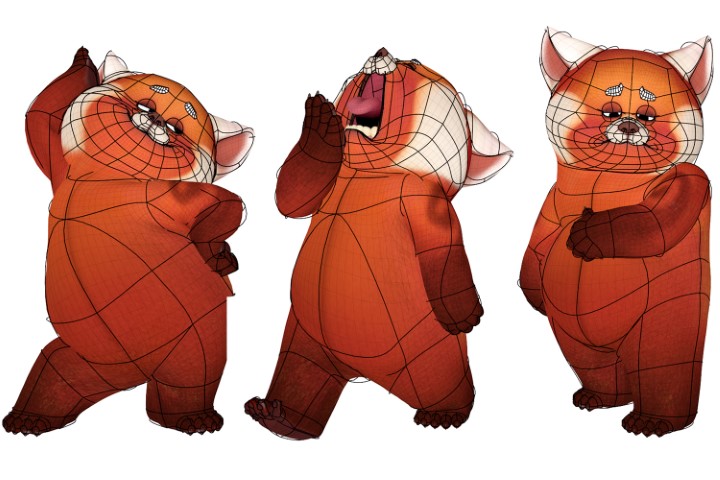
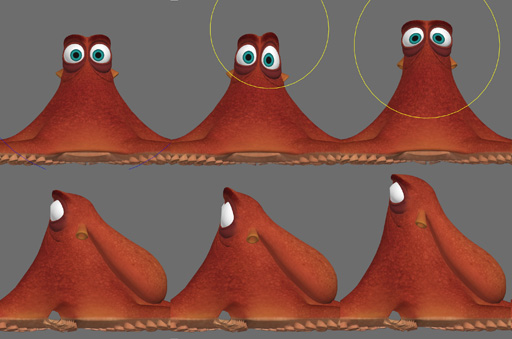
Title: A Brief Overview of the CurveNet Rigging Technology
Abstract: In this talk, I will recap some of the recent
rigging developments at Pixar. In particular, I will present the core
concepts and workflows underlying the CurveNet technology and describe
how Pixar's feature films use it.
Hybrid: Fernando will be remote on Zoom (see Canvas for link). Join online or in class (Gates B3).
References:
- Fernando de Goes, William Sheffler, Kurt Fleischer, Character Articulation through Profile Curves, SIGGRAPH / ACM Transactions on Graphics, 2022. [PDF] [Examples] [Presentation]
- Duc Nguyen, Jeremie Talbot, William Sheffler, Mark Hessler, Kurt Fleischer, Fernando de Goes, Shaping the Elements: Curvenet Animation Controls in Pixar's Elemental, SIGGRAPH Talks, 2023. [PDF] [Video]
|
ThMar05
|
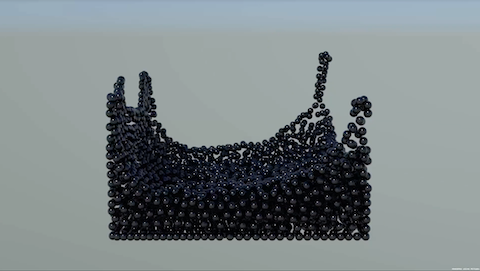
Fluids I (Particles)
|
Slides (248B)
Material:
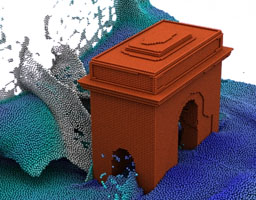
- Smoothed Particle Hydrodynamics (SPH)
- Matthias Müller, David Charypar, Markus Gross, Particle-based fluid simulation for interactive applications, 2003 ACM SIGGRAPH / Eurographics Symposium on Computer Animation (SCA 2003), August 2003, pp. 154-159. [Video]
- Miles Macklin and Matthias Müller. Position Based Fluids. ACM Trans. Graph. 32, 4, Article 104 (July 2013), 12 pages. [PDF] [Slides] [Video] [Project Page] (other videos)
- Liu, G. Gui-Rong, and M. B. Liu. Smoothed particle hydrodynamics: a meshfree particle method. World Scientific, 2003.
- Wikipedia
- Takahiro Harada, Seiichi Koshizuka, Yoichiro Kawaguchi, Smoothed Particle Hydrodynamics on GPUs, Computer Graphics International, pp. 63-70, 2007.
- B. Solenthaler, R. Pajarola, Predictive-Corrective Incompressible SPH, ACM Transactions on Graphics, 28(3), July 2009, pp. 40:1-40:6. [PDF] [YouTube Video]
- SIGGRAPH fluids course: [SPH pages (pp. 83-86)]
- Bridson, R., Fedkiw, R., and Muller-Fischer, M. 2006. Fluid simulation: SIGGRAPH 2006 course notes,
In ACM SIGGRAPH 2006 Courses (Boston, Massachusetts, July 30 - August
03, 2006). SIGGRAPH '06. ACM Press, New York, NY, 1-87. [Slides, Notes]
- Robert Bridson, Fluid Simulation for Computer Graphics, A K Peters, 2008. [Book format]
- Coupling SPH and rigid-body simulations (advanced):
- N. Akinci, M. Ihmsen, G. Akinci, B. Solenthaler, M. Teschner, Versatile Rigid-Fluid Coupling for Incompressible SPH, ACM Trans. Graph. (SIGGRAPH Proc.), 2012. [PDF] [AVI]
- Unified particle physics:
- Miles Macklin, Matthias Müller, Nuttapong Chentanez, Tae-Yong Kim, Unified Particle Physics for Real-Time Applications, ACM Transactions on Graphics (SIGGRAPH 2014), 33(4) [Slides] [PDF] [Video] [Project Page]
- Isosurface extraction + rendering
|
| ThMar05
|
Fluids II (Grids)
|
Slides
Topics:
- Navier-Stokes equations; Euler equations for inviscid fluids
- Advection; semi-Lagrangian methods
- Splitting schemes
- Incompressibility constraint & divergence-free flow
- Helmholtz-Hodge decompositions; pressure projection
- PIC/FLIP methods [Zhu & Bridson 2005]
- APIC method [Jiang et al. 2015]
Material:
- Bridson, R. and Muller-Fischer, M. 2007. Fluid Simulation for Computer Animation: SIGGRAPH 2007 Course Notes, In ACM SIGGRAPH 2007 Courses. [Slides, Notes] (main reference for class)
- Jos Stam, Stable Fluids, Proceedings of SIGGRAPH 99, Computer Graphics Proceedings, Annual Conference Series, August 1999, pp. 121-128. [Slides and notes]
- Ronald Fedkiw, Jos Stam, Henrik Wann Jensen, Visual Simulation of Smoke,
Proceedings of ACM SIGGRAPH 2001, Computer Graphics Proceedings, Annual
Conference Series, August 2001, pp. 15-22. (introduces vorticity confinement forces)
- C. Jiang, C. Schroeder, A. Selle, J. Teran, A. Stomakhin, An Affine Particle-In-Cell Method, ACM Transactions on Graphics (SIGGRAPH 2015), 34(4), pp. 51:1-51:10, 2015. [PDF] [Project] [YouTube]
- Y. Zhu and R. Bridson, Animating sand as a fluid, ACM SIGGRAPH 2005. [PDF] [MOV] (introduced PIC/FLIP to graphics)
|
|
Material Point Method (MPM), and Snow Simulation
|
Discussed:
- Material Point Method (MPM) overview
- Application to snow simulation
- Deformation gradient
- Elastic strain energy, forces, and gradients
- Multiplicative plasticity methodology; application to snow
- Grid force and gradient calculations
- Semi-implicit integration of velocities
- Deformation gradient update
- Grid and particle collision handling
- Slides (courtesy Craig Schroeder & Joseph Teran)
- Practical tips for making a minimum viable snow simulator
Material:
- Alexey Stomakhin, Craig Schroeder, Lawrence Chai, Joseph Teran, Andrew Selle, A Material Point Method for Snow Simulation, ACM Transactions on Graphics (SIGGRAPH 2013), 32(4), pp. 102:1-102:10, 2013. [PDF] [YouTube Video]
- Chenfanfu Jiang, Craig Schroeder, Joseph Teran, Alexey Stomakhin, Andrew Selle, The Material Point Method for Simulating Continuum Materials, SIGGRAPH Course 2016. [PDF]
- Disney's Matterhorn simulator
|
TuMar10
ThMar12 |
Final Project Presentations
|
See Ed for instructions (slide deck, Canvas submission) |
|
Discrete Elastic Rods
|
Reference:
|
|
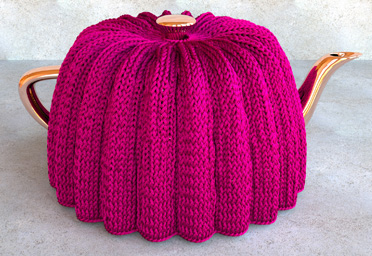
Yarn-level Cloth
|
References:
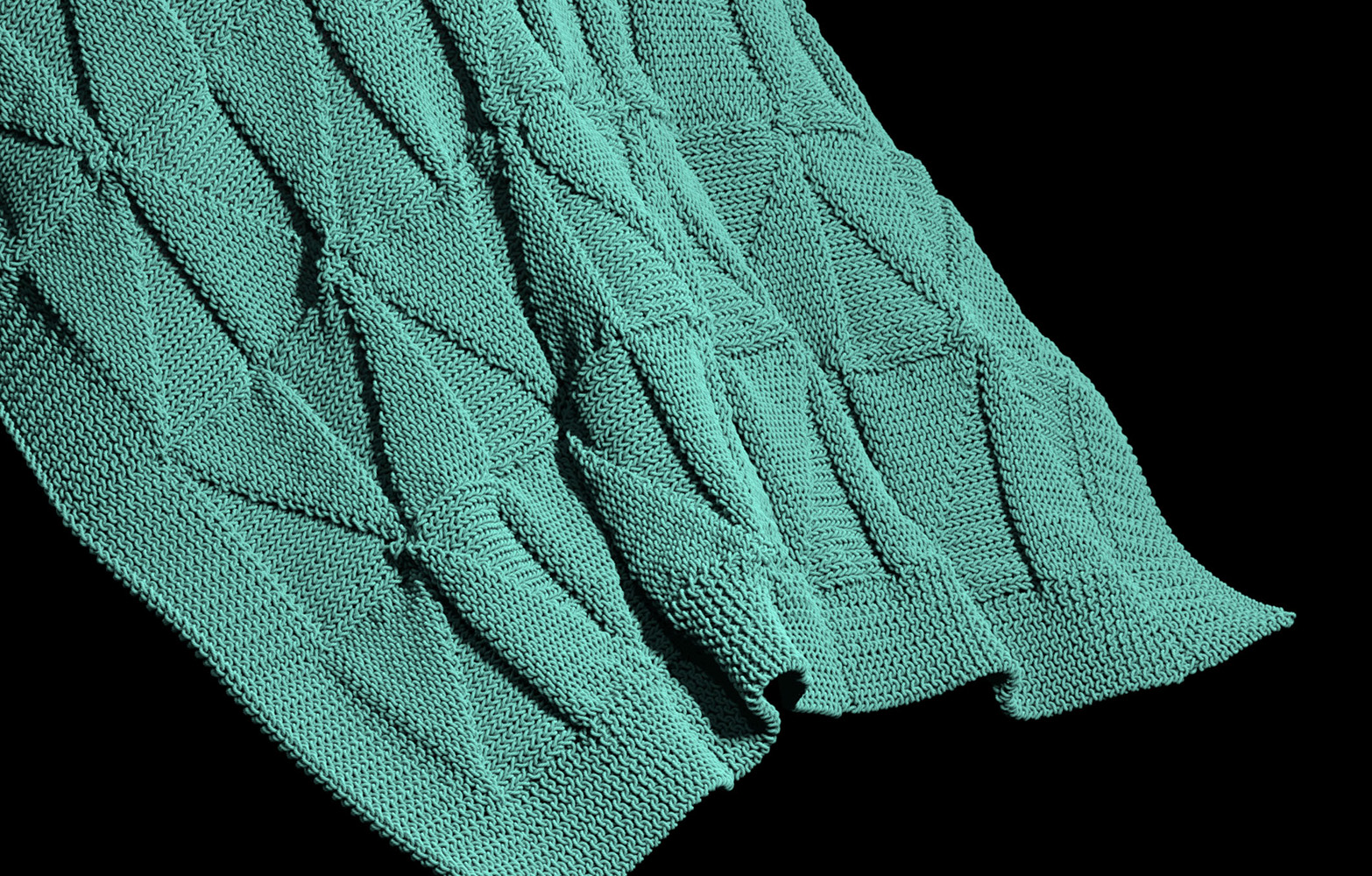
- Jonathan M. Kaldor, Doug L. James, Steve Marschner, Simulating Knitted Cloth at the Yarn Level, ACM Transactions on Graphics, 27(3), August 2008, pp. 65:1-65:9.
- Jonathan M. Kaldor, Doug L. James, and Steve Marschner. 2010. Efficient yarn-based cloth with adaptive contact linearization. In ACM SIGGRAPH 2010 papers (SIGGRAPH '10). Association for Computing Machinery, New York, NY, USA, Article 105, 1–10. https://doi.org/10.1145/1833349.1778842
- Cem Yuksel, Jonathan M. Kaldor, Doug L. James, and Steve Marschner. 2012. Stitch meshes for modeling knitted clothing with yarn-level detail. ACM Trans. Graph. 31, 4, Article 37 (July 2012), 12 pages. https://doi.org/10.1145/2185520.2185533
- Jonathan Leaf, Rundong Wu, Eston Schweickart, Doug L. James, and Steve Marschner. 2018. Interactive design of periodic yarn-level cloth patterns. ACM Trans. Graph. 37, 6, Article 202 (December 2018), 15 pages. https://doi.org/10.1145/3272127.3275105
- Kui Wu, Xifeng Gao, Zachary Ferguson, Daniele Panozzo, and Cem Yuksel. 2018. Stitch meshing. ACM Trans. Graph. 37, 4, Article 130 (August 2018), 14 pages. https://doi.org/10.1145/3197517.3201360
- Kui Wu, Hannah Swan, and Cem Yuksel. 2019. Knittable Stitch Meshes. ACM Trans. Graph. 38, 1, Article 10 (February 2019), 13 pages. https://doi.org/10.1145/3292481 [Interactive knitting demo]
- Vidya Narayanan, Kui Wu, Cem Yuksel, and James McCann. 2019. Visual knitting machine programming. ACM Trans. Graph. 38, 4, Article 63 (July 2019), 13 pages. DOI: https://doi.org/10.1145/3306346.3322995
- Rundong Wu,
Joy Xiaoji Zhang, Jonathan Leaf, Xinru Hua, Ante Qu, Claire Harvey,
Emily Holtzman, Joy Ko, Brooks Hagan, Doug James, François Guimbretière,
and Steve Marschner. 2020. Weavecraft: an interactive design and simulation tool for 3D weaving. ACM Trans. Graph. 39, 6, Article 210 (December 2020), 16 pages. https://doi.org/10.1145/3414685.3417865
|
|
Kelvinlets
|
Material:
- Fernando De Goes and Doug L. James. 2017. Regularized Kelvinlets: Sculpting brushes based on fundamental solutions of elasticity. ACM Trans. Graph. 36, 4, Article 40 (July 2017), 11 pages.
- Fernando De Goes and Doug L. James. 2018. Dynamic Kelvinlets: Secondary motions based on fundamental solutions of elastodynamics. ACM Trans. Graph. 37, 4, Article 81 (July 2018), 10 pages.
- Fernando de Goes and Doug L. James. 2019. Sharp Kelvinlets: Elastic deformations with cusps and localized falloffs.
In Proceedings of the 2019 Digital Production Symposium (DigiPro '19).
Association for Computing Machinery, New York, NY, USA, Article 2, 1–8.
|
|
|
|
|
Rigid-body Contact: Impulse- and Constraint-based Methods:
|
Material:
- General discussion of rigid-body contact principles (contact
constraints & impulses, restitution, Coulomb friction, maximal
dissipation principle, Signorini-Fichera condition, connection with
constrained optimization & KKT conditions, etc.), and methods such
as impulse-based [Guendelman et al. 2003] and constraint-based [Erleben
et al. 2007; Kaufman et al. 2008] solvers.
- Impulse-based contact solvers:
- Brian Mirtich, John Canny, Impulse-based Simulation of Rigid Bodies, 1995 Symposium on Interactive 3D Graphics, April 1995, pp. 181-188.
- Eran Guendelman, Robert Bridson, Ronald P. Fedkiw, Nonconvex Rigid Bodies With Stacking, ACM Transactions on Graphics, 22(3), July 2003, pp. 871-878. [an iterative impulse-based solver]
- Projected Gauss-Seidel solver:
- K. Erleben, Stable, robust, and versatile multibody dynamics animation. Ph.D. thesis, Department of Computer Science, University of Copenhagen, Denmark, 2005. [avi movie]
- K. Erleben, Velocity-based shock propagation for multibody dynamics animation, ACM Trans. Graph. 26, 2, Jun. 2007.
- Projected Jacobi solver:
- SIAM Review of rigid-body contact:
- Excellent recent review:
- "Staggered Projections" method:
- A good reference on convex optimization:
- Stephen Boyd and Lieven Vandenberghe, Convex Optimization, Cambridge University Press, 2004.
- Stanford lecture notes/book [PDF]
|
|
Animation Sound
|
Material:
- K. van den Doel and D. K. Pai, The Sounds of Physical Shapes, Presence: Teleoperators and Virtual Environments, 7:4, The MIT Press, 1998. pp. 382--395.
- Kees van den Doel, Paul G. Kry, Dinesh K. Pai, FoleyAutomatic: Physically-Based Sound Effects for Interactive Simulation and Animation, Proceedings of ACM SIGGRAPH 2001, Computer Graphics Proceedings, Annual Conference Series, August 2001, pp. 537-544. [Video]
- Dinesh K. Pai, Kees van den Doel, Doug L. James, Jochen Lang, John E. Lloyd, Joshua L. Richmond, Som H. Yau, Scanning Physical Interaction Behavior of 3D Objects, Proceedings of ACM SIGGRAPH 2001, Computer Graphics Proceedings, Annual Conference Series, August 2001, pp. 87-96. [Video]
- James F. O'Brien, Perry R. Cook, Georg Essl, Synthesizing Sounds From Physically Based Motion, Proceedings of ACM SIGGRAPH 2001, Computer Graphics Proceedings, Annual Conference Series, August 2001, pp. 529-536.
- Perry R. Cook, Sound Production and Modeling, IEEE Computer Graphics & Applications, 22(4), July-August 2002, pp. 23-27.
- James F. O'Brien, Chen Shen, and Christine M. Gatchalian. Synthesizing sounds from rigid-body simulations. In The ACM SIGGRAPH 2002 Symposium on Computer Animation, pages 175–181. ACM Press, July 2002.
- Yoshinori Dobashi, Tsuyoshi Yamamoto, Tomoyuki Nishita, Real-Time Rendering of Aerodynamic Sound Using Sound Textures Based on Computational Fluid Dynamics, ACM Transactions on Graphics, 22(3), July 2003, pp. 732-740. [project page]
- Doug L. James, Jernej Barbič and Dinesh K. Pai, Precomputed Acoustic Transfer: Output-sensitive, accurate sound generation for geometrically complex vibration sources, ACM Transactions on Graphics, 25(3), pp. 987-995, July 2006, pp. 987-995.
- Changxi Zheng and Doug L. James, Harmonic Fluids, ACM Transaction on Graphics (SIGGRAPH 2009), 28(3), August 2009, pp. 37:1-37:12.
- Jeffrey Chadwick, Steven An, and Doug L. James, Harmonic Shells: A Practical Nonlinear Sound Model for Near-Rigid Thin Shells, ACM Transactions on Graphics (SIGGRAPH ASIA Conference Proceedings), 28(5), December 2009, pp. 119:1-119:10.
- Changxi Zheng and Doug L. James, Rigid-Body Fracture Sound with Precomputed Soundbanks, ACM Transactions on Graphics (SIGGRAPH 2010), 29(3), July 2010, pp. 69:1-69:13.
- Jeffrey Chadwick and Doug L. James, Animating Fire with Sound, ACM Transactions on Graphics, 30(4), August 2011.
- Jeffrey N. Chadwick, Changxi Zheng and Doug L. James, Precomputed Acceleration Noise for Improved Rigid-Body Sound, ACM Transactions on Graphics, August 2012.
- Steven S. An, Doug L. James, and Steve Marschner, Motion-driven Concatenative Synthesis of Cloth Sounds, ACM Transactions on Graphics, August 2012.
- Timothy R. Langlois and Doug L. James, Inverse-Foley Animation: Synchronizing rigid-body motions to sound, ACM Transactions on Graphics (SIGGRAPH 2014), 33(4), August 2014.
|


 ]
]













![from [Kim et al. 2008]](http://www.cs.cornell.edu/~djames/research/pics/Kim08.png)