Publications
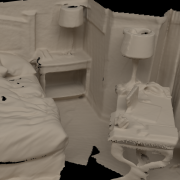
3DMatch: Learning the Matching of Local 3D Geometry in Range Scans
arXiv 2016
In this paper, we introduce 3DMatch, a data-driven local feature learner that jointly learns a geometric feature representation and an associated metric function from a large collection of real-world scanning data.
paper | bibtex | project page
Opt: A Domain Specific Language for Non-linear Least Squares Optimization in Graphics and Imaging
arXiv 2016
We propose a new language, Opt, in which a user simply writes energy functions over image- or graph-structured unknowns, and a compiler automatically generates state-of-the-art GPU optimization kernels.
paper | bibtex | project page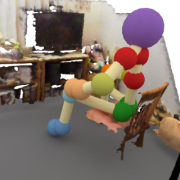
PiGraphs: Learning Interaction Snapshots from Observations
SIGGRAPH 2016
We learn a probabilistic model connecting human poses and arrangements of objects from observations of interactions collected with commodity RGB-D sensors. This model is encoded as a set of Prototypical Interaction Graphs (PiGraphs): a human-centric representation capturing physical contact and attention linkages between geometry and the human body.
paper | video | bibtex | project page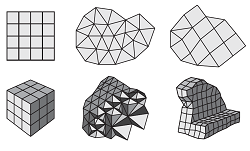
Ebb: A DSL for Physical Simulation on CPUs and GPUs
Transactions on Graphics (SIGGRAPH) 2016
We present Ebb, a domain-specific language (DSL) for simulation, that runs efficiently on both CPUs and GPUs.
paper | bibtex | project page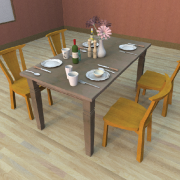
Activity-centric Scene Synthesis for Functional 3D Scene Modeling
ACM Transactions on Graphics 2015 (TOG)
We present a novel method to generate 3D scenes that allow the same activities as real environments captured through noisy and incomplete 3D scans.
paper | video | bibtex | project page
Real-time Rendering Techniques with Hardware Tessellation
Computer Graphics Forum 2015
In this survey, we provide an overview of real-time rendering techniques with hardware tessellation by summarizing, discussing, and comparing state-of-the art approaches.
paper | bibtex | project page
SceneGrok: Inferring Action Maps in 3D Environments
SIGGRAPH Asia 2014, Shenzhen
In this paper, we present a method to establish a correlation between the geometry and the functionality of 3D environments.
paper | video | bibtex | project page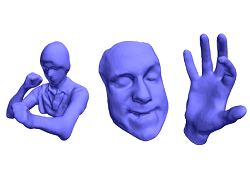
Real-time Non-rigid Reconstruction using an RGB-D Camera
SIGGRAPH 2014, Vancouver
Presents a combined hardware and software solution for markerless reconstruction of non-rigidly deforming physical objects with arbitrary shape in real-time.
paper | video | bibtex | project page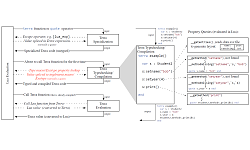
First-class Runtime Generation of High-performance Types using Exotypes
Programming Language Design and Implementation 2014
Introduces exotypes, which are user-defined types that combine the flexibility of meta-object protocols in dynamically-typed languages with the performance control of low-level languages.
paper | bibtex | project page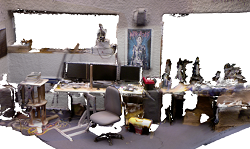
Combining Inertial Navigation and ICP for Real-time 3D Surface Reconstruction
Eurographics 2014, Strasbourg
Presents a novel method to improve the robustness of real-time 3D surface reconstruction by incorporating inertial sensor data when determining inter-frame alignment.
paper | video | bibtex | project page
Probabilistic Color-by-Numbers: Suggesting Pattern Colorizations Using Factor Graphs
SIGGRAPH 2013, Los Angeles
Coloring in pattern images by learning a probabilistic model from example patterns colored by artists.
paper | bibtex | project page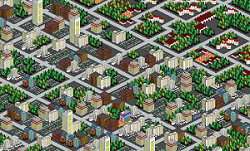
Synthesis of Tiled Patterns using Factor Graphs
SIGGRAPH 2013, Los Angeles
Describes a method for synthesizing new patterns of tiles that are similar in appearance to a set of example patterns.
paper | bibtex | project page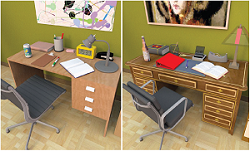
Example-based Synthesis of 3D Object Arrangements
SIGGRAPH Asia 2012, Singapore
Presents a system that synthesizes new 3D scenes from a few examples by learning from a larger scene database.
paper | bibtex | project page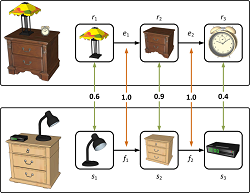
Characterizing Structural Relationships in Scenes Using Graph Kernels
SIGGRAPH 2011, Vancouver
Represents scenes as graphs that encode models and their semantic relationships, then defines a kernel between these relationship graphs that compares common virtual substructures and captures the similarity between scenes.
paper | bibtex | project page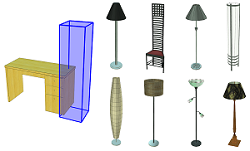
Context-Based Search for 3D Models
SIGGRAPH Asia 2010, Seoul
Describe a data-driven method that uses scenes from Google 3D Warehouse to enable context-based model search of 3D scenes.
paper | bibtex | project page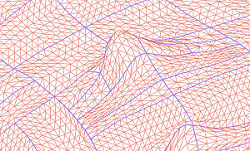
DiagSplit: Parallel, Crack-Free, Adaptive Tessellation for Micropolygon Rendering
SIGGRAPH Asia 2009, Yokohama
Presents DiagSplit, a parallel algorithm for adaptively tessellating displaced parametric surfaces into high-quality, crack-free micropolygon meshes.
paper | bibtex | project page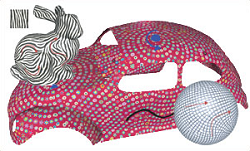
Design of Tangent Vector Fields
SIGGRAPH 2007, San Diego
Using tools from Discrete Exterior Calculus, we present a simple and efficient algorithm for designing tangent vector fields over arbitrary triangle meshes.
paper | bibtex | project page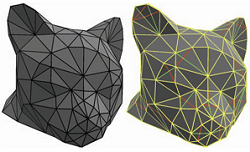
An Algorithm for the Construction of Intrinsic Delaunay Triangulations
SIGGRAPH 2006
Presents an algorithm for computing an intrinsic Laplace-Beltrami operator based on an intrinsic Delaunay triangulation of the surface.
paper | bibtex | project page